Lux Perfumes
Lux Perfumes is a perfume shop. Stock, checkout, refunds, and receipts were all kept by hand, so the count on paper and the count on the shelf drifted apart. We built them one desktop app that does the inventory and the till together, with card payments going through their own terminal.
- $4k+
- annual processing-fee savings
- 125 hrs
- labor saved annually
- 5
- split-tender charges supported
| Before | Now | |
|---|---|---|
| Stock count | Kept by hand | Every sale, refund, and void updates it |
| Card payments | The terminal and the records were separate | The app sends the charge to the terminal and records it with the sale |
| Paying two ways | One payment per sale | Cash plus up to five card charges on one sale |
| Refunds and voids | Fixed by hand afterwards | A void or cancel puts the stock back |
| Expiring stock | Noticed when it was noticed | The dashboard lists what expires soon |
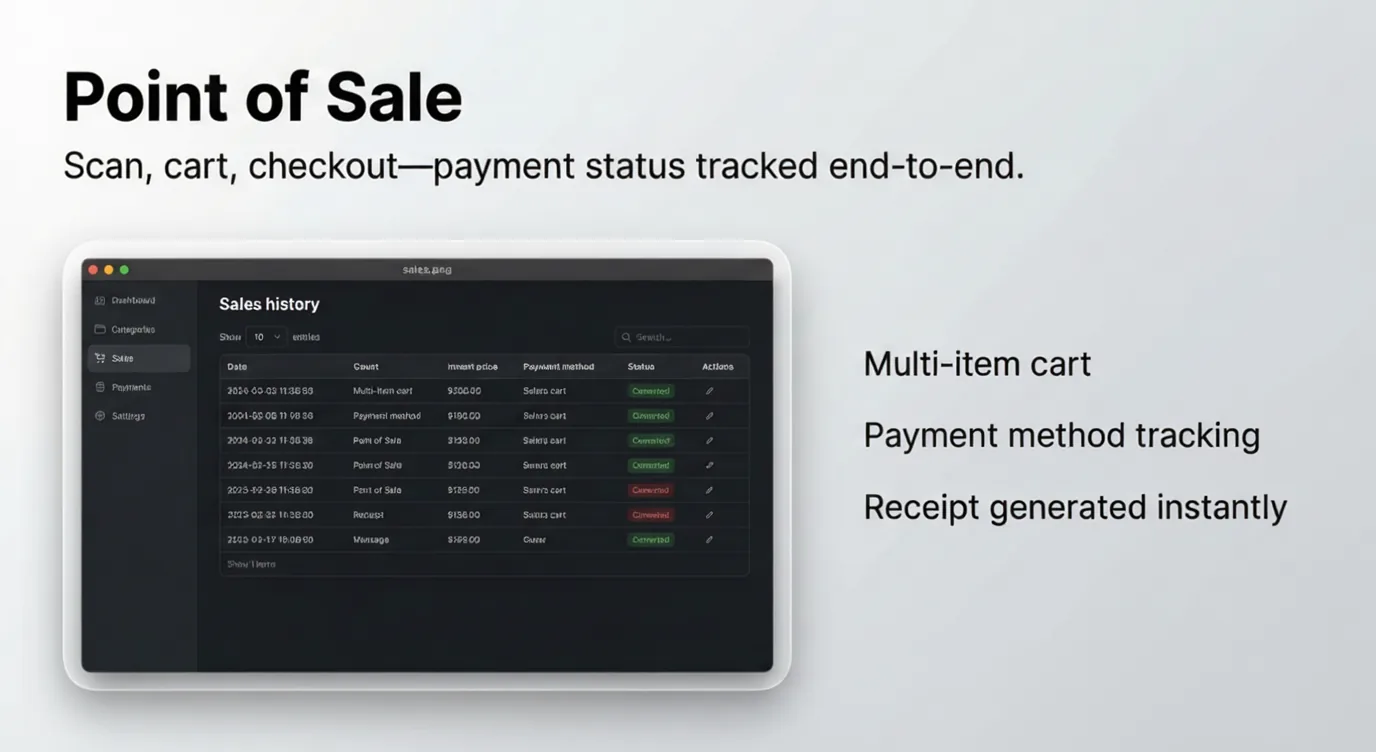
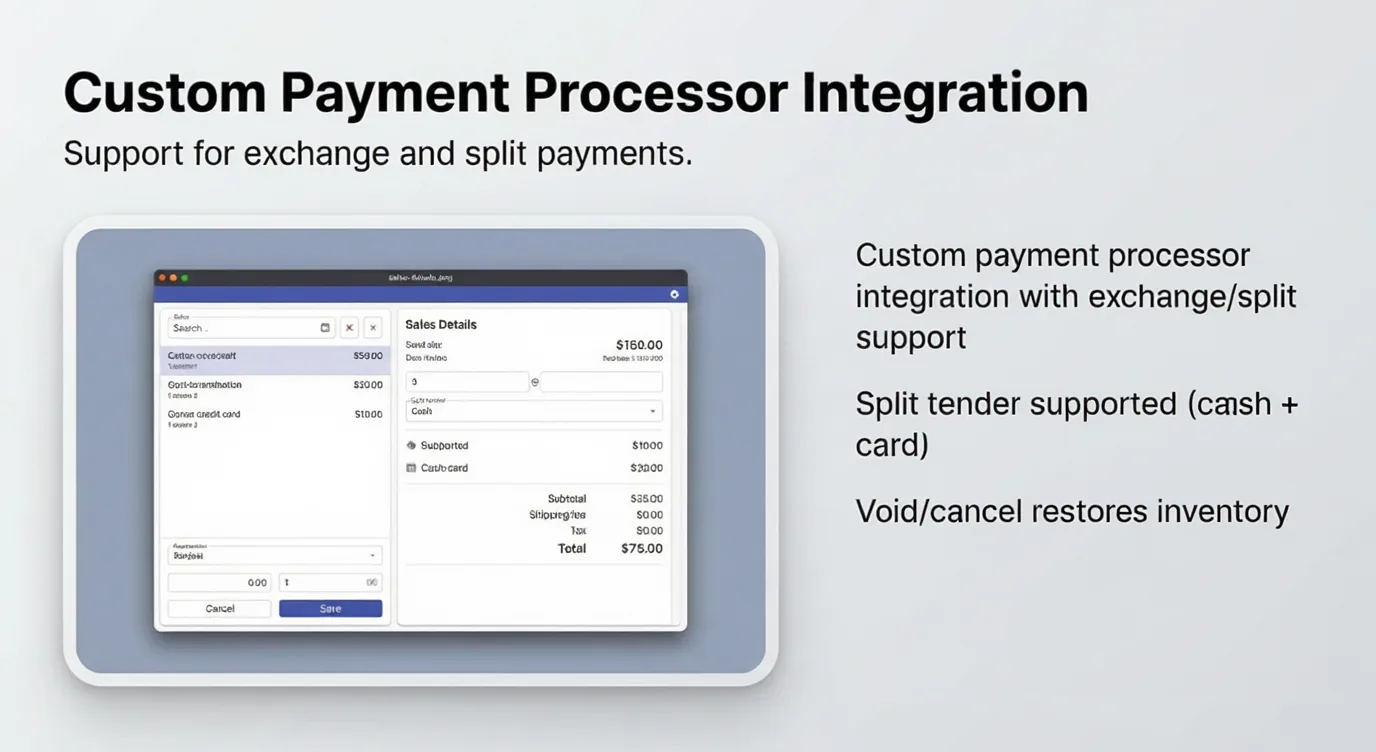
Checkout runs on a Helcim card terminal. The app sends the amount to the terminal, then waits for the terminal to say the charge went through, by polling and by webhook. A sale is not marked paid until it does.
Customers sometimes pay part in cash and the rest across cards. So one sale can take cash plus up to five card charges, and the receipt shows each one.
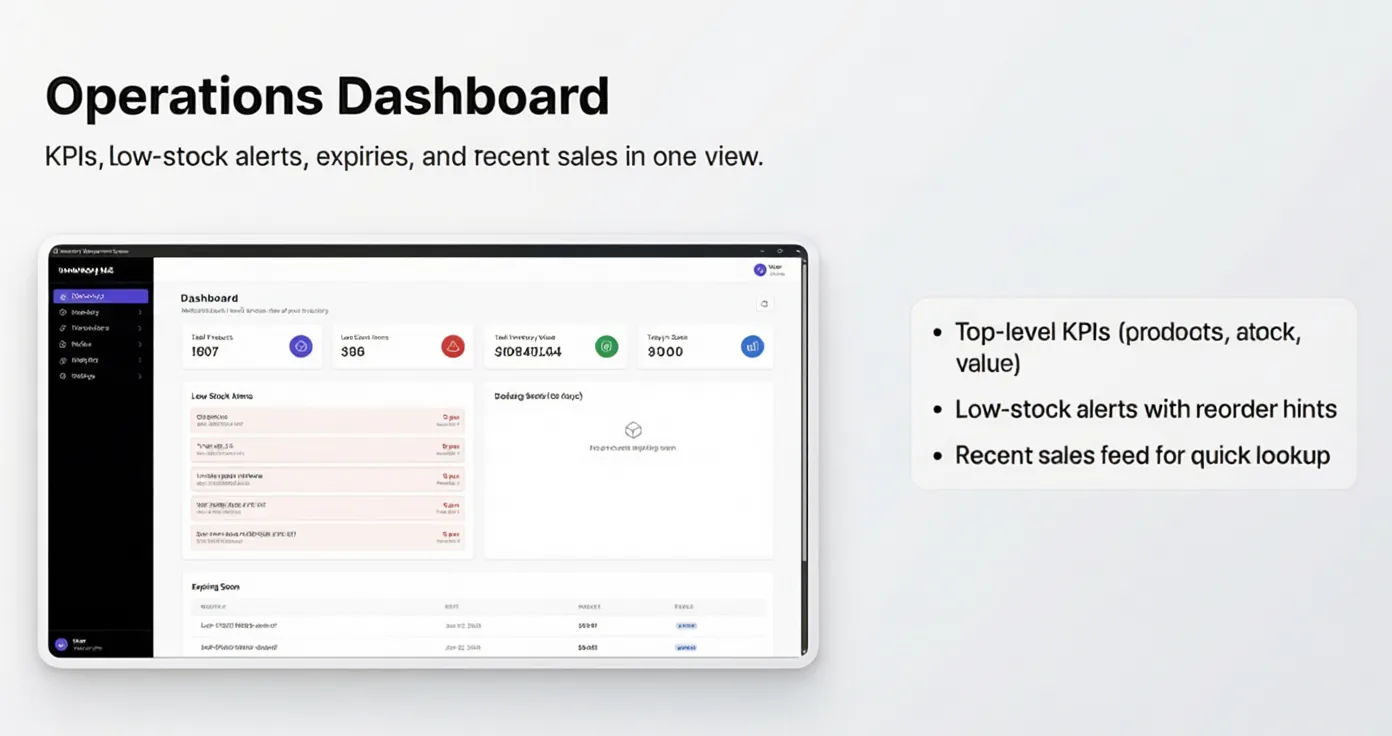
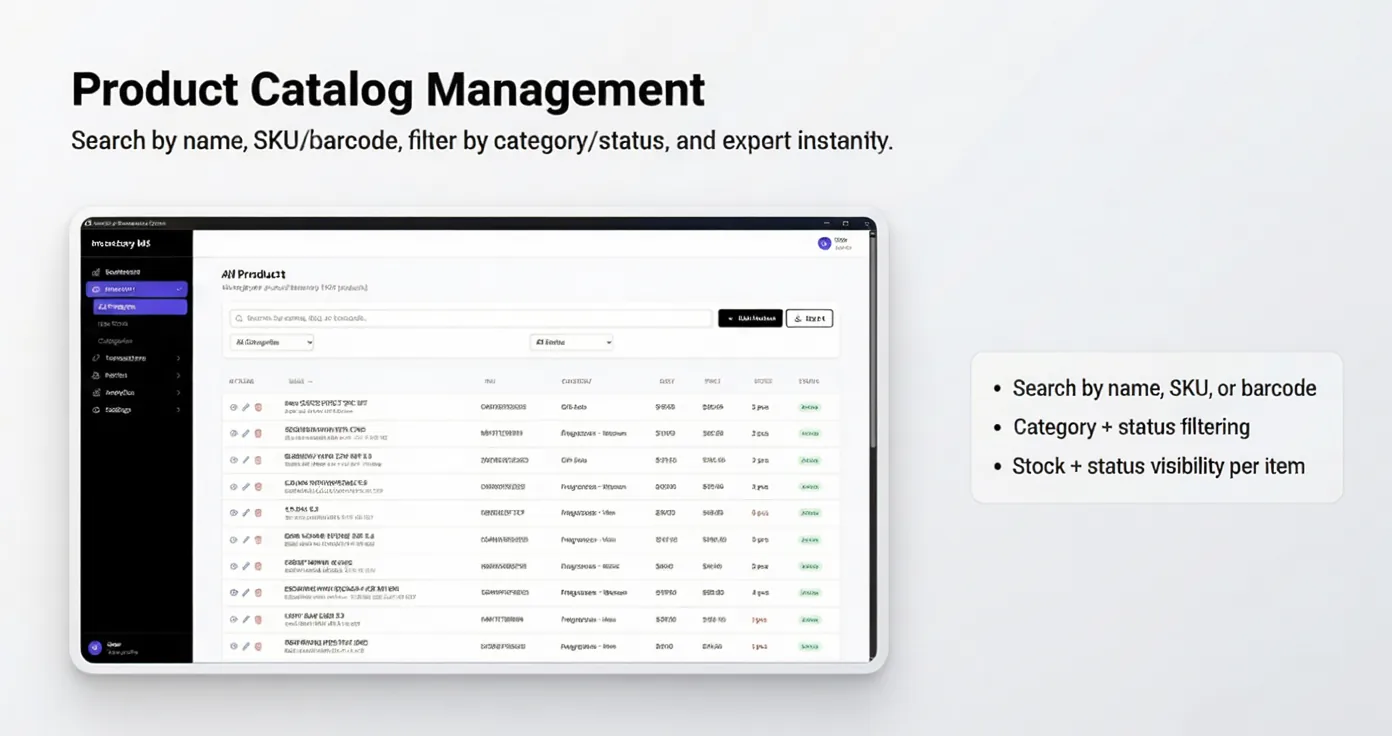
Every product has its SKU and barcode, so the staff scan instead of typing. When something runs low the dashboard says so, with a hint for how much to reorder.
Perfume expires, so expiry dates are tracked too. A void or a cancelled sale puts the bottle back in stock, which is where the paper count used to go wrong.
Receipts print at the counter and can be reprinted later. Staff see the till, the owner sees the reports, and everything is backed up.
By the shop’s estimate, more than $4,000 a year in card processing fees and about 125 hours of work a year.